Google turns 28: today's homepage Doodle celebrates its birthday
On September 27, 2026, Google's homepage switched to a birthday-themed Doodle to celebrate Google's 28th birthday. From a search project in a Stanford dorm to a platform handling around nine in ten searches worldwide, this is a look back at Google's 28 years.
Also available in 简体中文
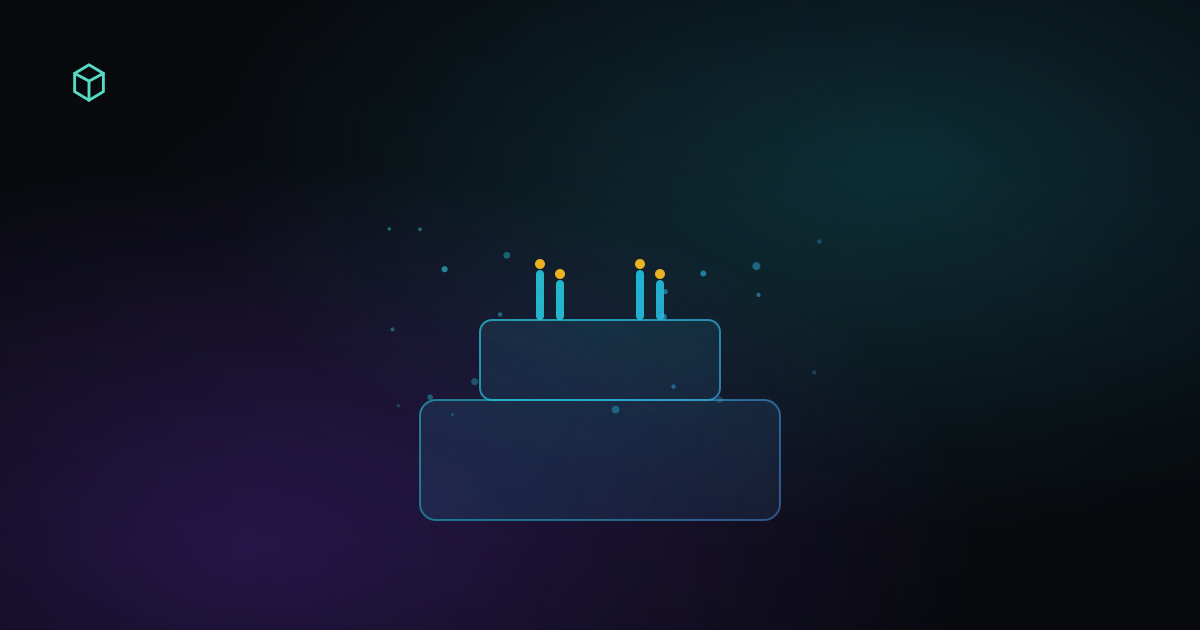
On September 27, 2026, Google’s homepage switched to a birthday-themed Doodle to celebrate Google’s 28th birthday.
This year’s Doodle uses a retro visual style inspired by the early Google look, placing today’s homepage next to its 1998 starting point.
Google’s 28 years began in a Stanford dorm
Google’s story started at Stanford University in 1995.
Larry Page and Sergey Brin built a search engine there together. It was first called Backrub, and later renamed Google.
In August 1998, Andy Bechtolsheim wrote a $100,000 check. Google Inc. was formally incorporated soon after.
That makes 2026 the 28th year since Google was born.
September 27 is a celebration date, not the founding date
Many people assume Google was formally founded on September 27, 1998. That claim is not accurate.
In its early years, Google did not always celebrate its birthday on September 27. The company’s own 2005 birthday post only says Google “opened its doors in September 1998” — it never defined September 27 as the official founding date.
Over time, Google settled on September 27 as the date it uses for birthday celebrations, and it has stayed that way since.
The more accurate reading is this: September 27 is the celebration date Google has used for years, not the company’s precise legal date of incorporation.
Google’s mission: organize the world’s information
Since 1998, Google’s official mission has stayed the same:
To organize the world’s information and make it universally accessible and useful.
That sentence explains why Google expanded from search into email, maps, mobile operating systems and video — all of them do the same thing at heart: make information easier to find and use.
Twenty-eight years on, that mission now extends into AI. Google has folded Gemini into Search and its productivity products, trying to turn “finding information” into “getting the answer directly.”
How big Google is today
Twenty-eight years later, Google is no longer that dorm-room search project.
Multiple third-party measurement firms have long put Google’s share of the global search market at around ninety percent, making it the default entry point to the internet in most countries.
Beyond Search, Google runs several products with more than a billion users each:
- Android, the most widely installed mobile operating system in the world
- YouTube, the largest video platform
- Gmail, Google Maps, Chrome and Google Play
Google itself lists Search, YouTube, Android and Gmail among the core products of its long-term development. In most of the world, using the internet is nearly synonymous with using Google.
Where Google is not directly available
“Universally accessible” does not mean “reachable from everywhere.”
Because network regulation differs by country, Google services cannot be accessed directly in some countries and regions. Mainland China is the most well-known example: starting in 2010, Google Search and other services left the mainland Chinese market, and local users still cannot open them directly.
That has produced a large group of cross-region users who, for work, study or life, need to use Google while moving between countries and networks.
For these users, being able to open Google is only the first layer of the problem. An easier one to overlook is whether the environment the current device and network present to websites has changed noticeably.
Using Google across regions: the account environment matters too
When you switch from one network to another, a website sees far more than a new IP.
Factors that may change include:
- IP country / region
- IP timezone vs. browser timezone
- Browser language
- WebRTC
- DNS
- Proxies and network exits
- Browser / device characteristics
Together, these signals form what platforms see as your “account environment.” When the environment diverges too far from an account’s history, extra identity verification becomes more likely.
This is the problem EnvTrace works on. To be clear: EnvTrace does not provide Google access services, and it does not change your network connection. What it does is show you the environment information your current browser, IP, network and device actually expose, and check it for obvious inconsistencies.
It helps you understand and manage your own Google usage environment more clearly across regions, devices and network conditions.
What EnvTrace can show you
EnvTrace can check:
- IP and network environment
- IP risk and proxy signals
- Browser and device information
- IP timezone vs. browser timezone consistency
- WebRTC
- DNS
- Browser environment consistency
EnvTrace does not change your network. It only helps you see your current network and browser environment clearly.